
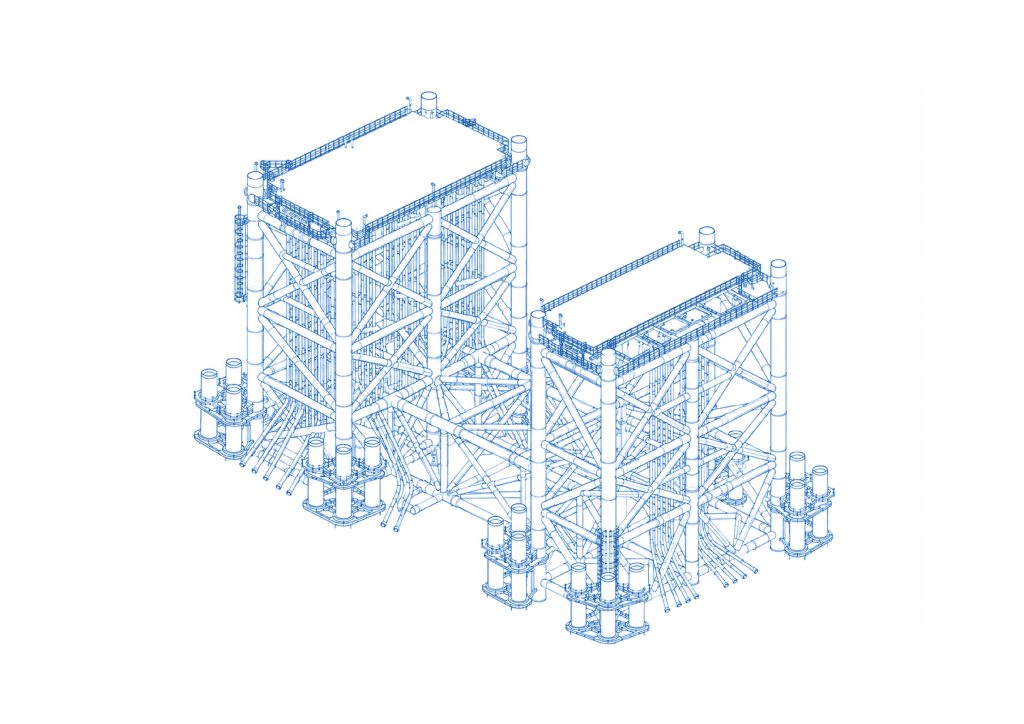
Offshore wind substation jackets have largely inherited their design DNA from oil & gas. That is not surprising, decades of structural engineering experience sits in those conventions. However, not every element translates cleanly to a modern HVDC substation, and as wind topsides scale towards 2 GW, some of those inherited elements deserve a closer look.
Two examples illustrate the point:
𝗕𝗿𝗮𝗰𝗶𝗻𝗴 𝗰𝗼𝗻𝗳𝗶𝗴𝘂𝗿𝗮𝘁𝗶𝗼𝗻: In oil & gas jackets, the bracing is shaped by the need to support production conductors and accommodate operational access, functional requirements that simply do not exist in an offshore wind substation. Carrying the same configuration forward by default can add steel and complexity without serving the same purpose.
𝗠𝘂𝗱 𝗺𝗮𝘁𝘀: For on-bottom stability these work well on relatively compact O&G jackets. On the larger 2GW-scale wind substation jackets now emerging, mudmats have grown so heavy that they pose a fabrication and installation challenge in their own right. Pre-piled jackets may offer a cleaner answer at this scale.
KCI brings decades of O&G structural engineering experience and 15+ years of dedicated wind jacket design experience under one roof. That dual experience lets us look critically at which O&G conventions still earn their place in a wind jacket and which can be challenged. We are currently carrying out exactly this kind of optimisation work with EPC partners. Engineering hours invested in that critical review at concept stage typically pay back several times over in steel, fabrication time, and installation cost.
Curious where some of those inherited conventions could be rethought on your project? Reach out at sales@kci.nl.
𝗗𝗥𝗜𝗩𝗜𝗡𝗚 𝗘𝗡𝗘𝗥𝗚𝗬 𝗦𝗢𝗟𝗨𝗧𝗜𝗢𝗡𝗦 𝗙𝗢𝗥𝗪𝗔𝗥𝗗
hashtagKCIOffshoreEngineering hashtagOffshoreSubstation hashtagHVDC hashtagJacketDesign hashtagStructuralEngineering hashtagOffshoreEngineering hashtagOptimisation